

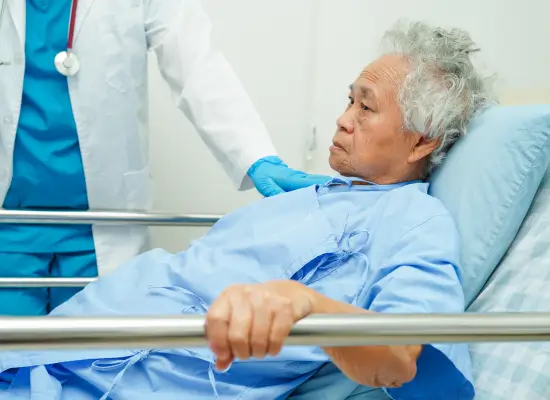
Synopsis
A stroke is a life-threatening condition that requires emergency treatment. Stress management has different stages. This article will help you learn about the best stroke management strategies and the best hospital for stroke management.
Introduction
Stroke management includes different stages, such as emergency treatment, hospital care, stabilisation, and long-term rehabilitation. It aims to minimise brain damage, restore lost functions, and prevent future episodes. Gleneagles Hospital offers the best brain stroke treatment and has the best brain stroke specialist doctor.
What is a Stroke?
A stroke is a medical emergency that occurs due to reduced blood flow to the brain. Stroke may be caused due to a blocked blood vessel or bleeding in the brain. Stroke is a life-threatening and dangerous condition. When someone is diagnosed with a stroke, they should be immediately shifted to the hospital for emergency treatment.
Types of Strokes
There are mainly three types of strokes:
1. Ischemic stroke: Ischemic stroke occurs when a blood clot blocks a blood vessel and disrupts the blood supply to the brain. Ischemic stroke may be caused due to the following reasons:
- Atherosclerosis
- Clotting disorders
- Atrial fibrillation
- Heart disorders such as atrial septal defect and ventricular septal defect
- Microvascular ischemic disease
2. Haemorrhagic stroke: Hemorrhagic stroke occurs due to a tear or break in the blood vessel that leads to bleeding in the brain. The main causes of hemorrhagic stroke include:
- High blood pressure
- Brain tumours
- Brain aneurysms
- Any other conditions that weakness the blood vessels in the brain
3. Transient ischemic attack: It is a type of mini-stroke in which the effects are temporary. These refer to the warning signs for a stroke in the future. A person having a transient ischemic attack must consult with a doctor immediately to prevent a real stroke.
Your health matters – get expert advice today.
Risk Factors for Stroke
Some people are at a higher risk of stroke. The risk factors for stroke include:
- People older than 60 years
- People who smoke or use non-prescription drugs.
- Excessive alcohol intake
- Suffering from continuous high blood pressure and medication is not taken to control it.
- People suffering from type 2 diabetes
- High cholesterol also increases the risk of stroke
- Frequent migraine headaches can also cause strokes in some people.
Stroke Management
Stroke management is divided into different steps given below:
1. Emergency Stroke Management: It is the most important time. Symptoms must be recognised in time. If a person has weakness of arms, speech difficulty, and a drooping face, you must call emergency services. The doctors will ensure that the airway, breathing, and circulation are proper. They will check oxygen levels and glucose and monitor blood pressure. Emergency management aims to:
- Restore blood circulation to the brain
- Support vital functions
- Reduce neurological problems
- Prevent progression and cell death
- Restore the patient to normal function
2. Hospital Treatment
- Ischemic stroke
- Intravenous thrombolysis: The doctor will immediately give an intravenous thrombolytic agent to dissolve the clot and restore blood flow to the brain. It is avoided in patients with a high risk of bleeding.
-Mechanical Thrombectomy: It is a medical procedure in which a surgeon removes the clot directly using a catheter. - Haemorrhagic stroke
-Blood pressure control: The doctors will give medicines to control blood pressure.
-Medications will be given to stop bleeding in the brain.
-Surgery may be done to remove a large hematoma and reduce increased intracranial pressure around your brain.
3. Monitoring: The patient is kept in the ICU (intensive care unit) for continuous monitoring and prevention of complications such as brain swelling, deep vein thrombosis, and aspiration pneumonia.
The doctor encourages early movement and compression stockings to prevent the risk of DVT (deep vein thrombosis) and pneumonia. Blood sugar and blood pressure (BP) are controlled to avoid recurrent strokes. Proper medications are given to control blood sugar and blood pressure.
4. Rehabilitation: Rehabilitation is recommended to restore function & independence and improve quality of life.
- A person with a stroke has to undergo different therapies to restore functions.
- Physical therapy is recommended to regain muscle strength. The physiotherapist will teach balance exercises and offer gait training.
- Occupational therapy helps to relearn daily activities such as dressing, eating, and using a phone.
- Speech therapy helps to recover speech. The doctor also teaches swallowing exercises to prevent choking while eating.
- The doctor also recommends counselling for preventing depression and providing emotional support to the patient.
Why choose Gleneagles Hospital for stroke management?
Gleneagles Hospital is the best hospital for brain stroke treatment. The hospital has one of the best stroke rehabilitation centers. You can reach the hospital immediately to get emergency treatment for a stroke. Other reasons to choose Gleneagles Hospital for stroke management are:
- Multidisciplinary approach: The Gleneagles Hospital uses a multidisciplinary approach to stroke management. The hospital has an expert team of experienced neurologists, neurosurgeons, radiologists, and rehabilitation specialists who work together to offer personalised treatment to patients from emergency treatment to complete recovery.
- Advanced diagnostic and treatment facilities: The hospital is equipped with cutting-edge techniques for making an accurate diagnosis and offering the best stroke treatment. The hospital is equipped with all facilities that help to manage different aspects of stroke, from emergency response to rehabilitation.
- Proper rehabilitation center: Rehabilitation after a stroke is an important part of recovery. Gleneagles Hospital has a team of dedicated and experienced physiotherapists who offer tailored rehabilitation programs to patients. The programs include physical, occupational, and speech therapy that helps patients regain mobility & independence and improve their overall quality of life.
- Around-the-clock response team: Timely intervention is important in stroke management; therefore, Gleneagles Hospital has a dedicated response team available around the clock to provide immediate and emergency care and attention to the patients.
- Patient-centric approach: The hospital uses a patient-centric approach and offers personalised treatments to the patients. They involve patients and families in decision-making processes to provide compassionate care and treatment. They understand the cause of stroke and make a suitable treatment plan depending on their needs.
Conclusion
Stroke management is important as early treatment and timely intervention can save lives. People suffering from stroke must receive comprehensive rehabilitation as it helps to enhance recovery and prevent future strokes. Patients should use preventive measures to prevent future strokes and live a healthy life. If you have anyone with a stroke history in the family, you must consult with a brain stroke specialist doctor.